



Serving Ontario Province-Wide

Ontario's HVAC
Design Experts

Professional residential HVAC design services — from precise heat load calculations to complete system drawings, ventilation documentation, and energy efficiency compliance.

100% Ontario Coverage
1,000+ Designs Completed
15+ Years in the Trade

Complete Residential
HVAC Design Services

From initial heat load calculations to permit-ready system drawings — we deliver precise, code-compliant HVAC designs for new builds and renovations across Ontario.

🌡️

Heat Loss & Gain Calculations

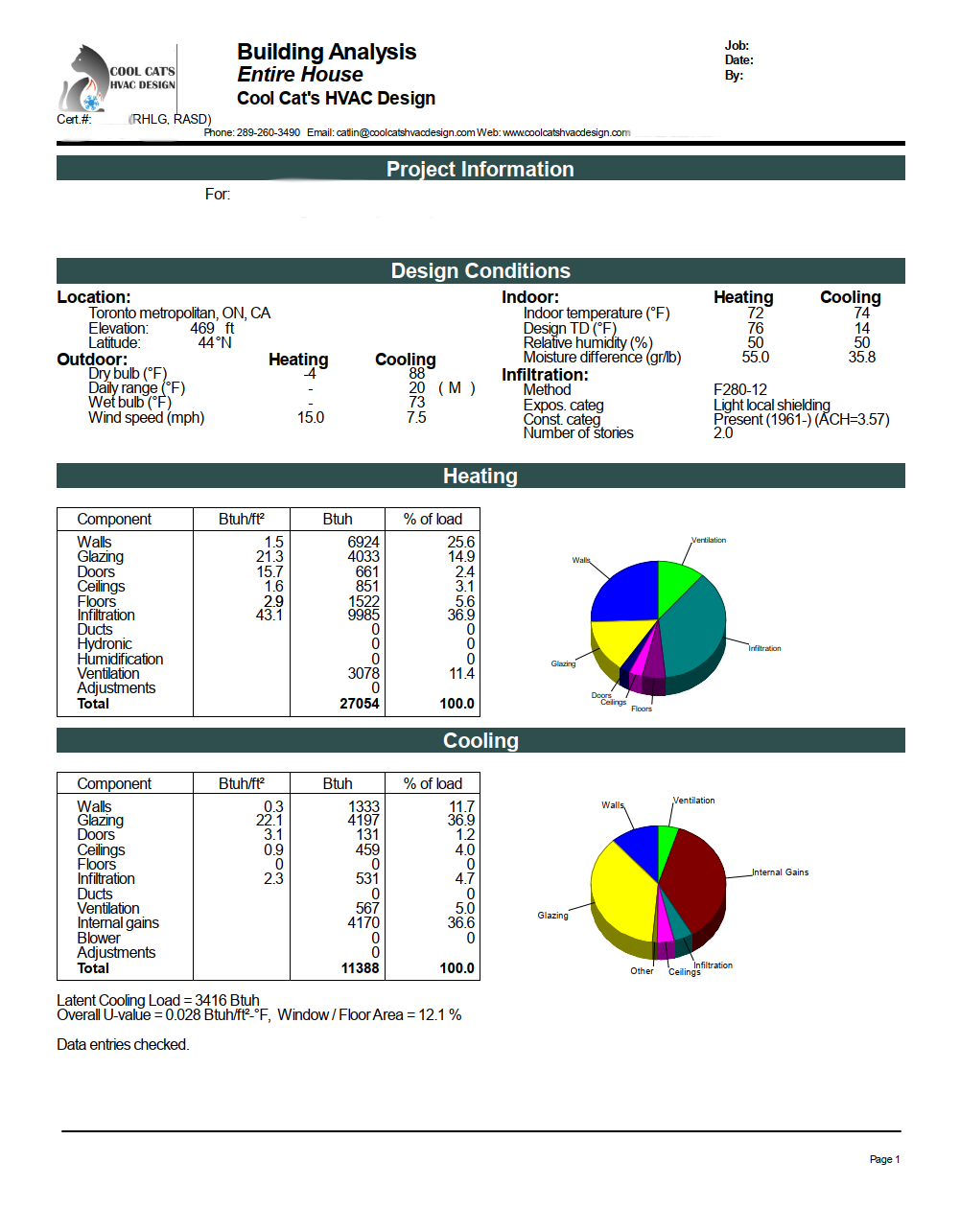
The essential first step to any HVAC system design. We calculate the precise heating and cooling loads for each room in your project using industry-standard methods, ensuring every space is correctly sized for year-round comfort — no more oversized or undersized systems.

Manual J / CSA F280
💨

Ventilation Design & Documentation

The vast majority of Ontario municipalities require a ventilation summary report for new builds and renovations to ensure adequate fresh air for occupants. We determine the optimal HRV or ERV setup for your project and provide all required permit documentation.

HRV / ERV Design
❄️

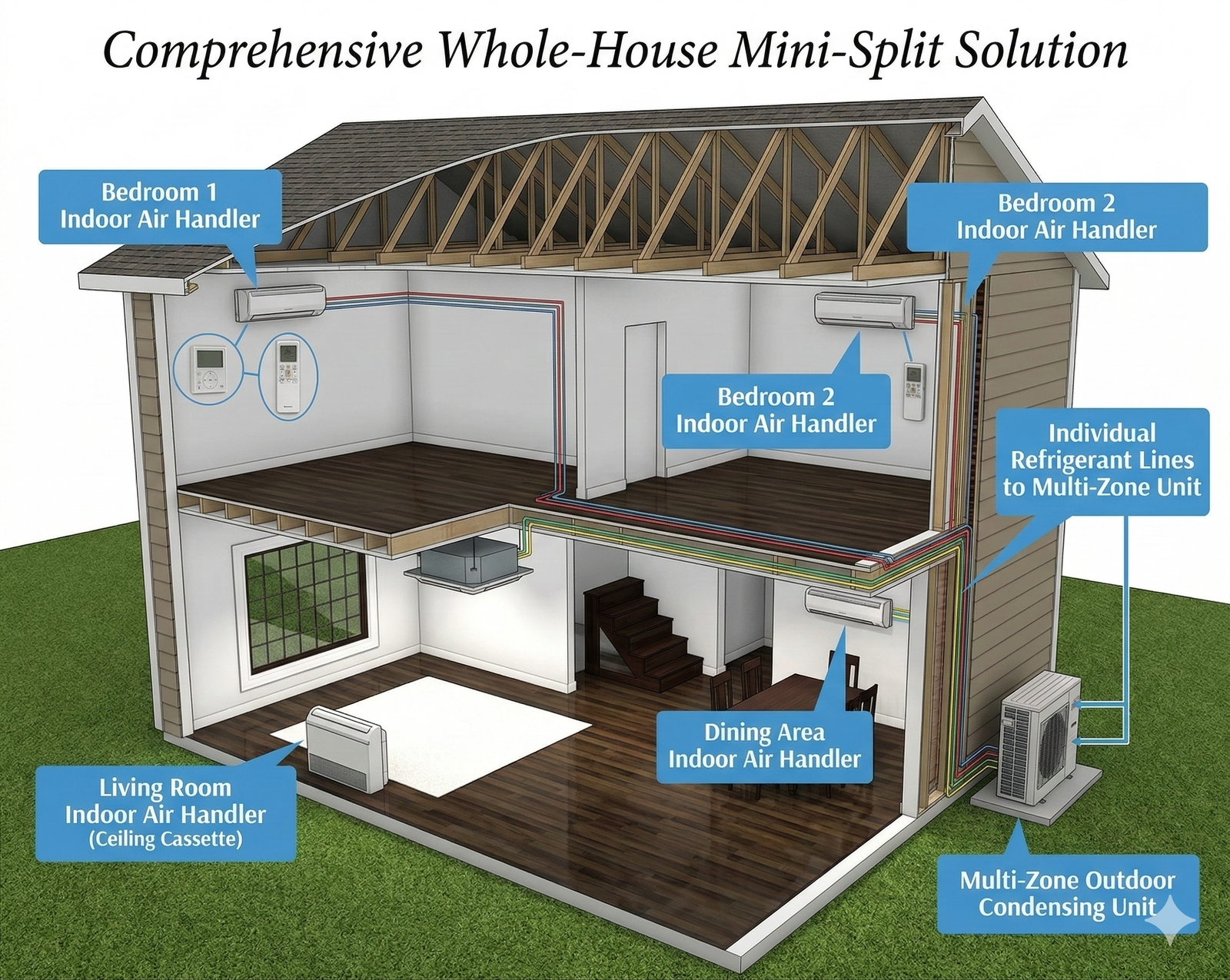
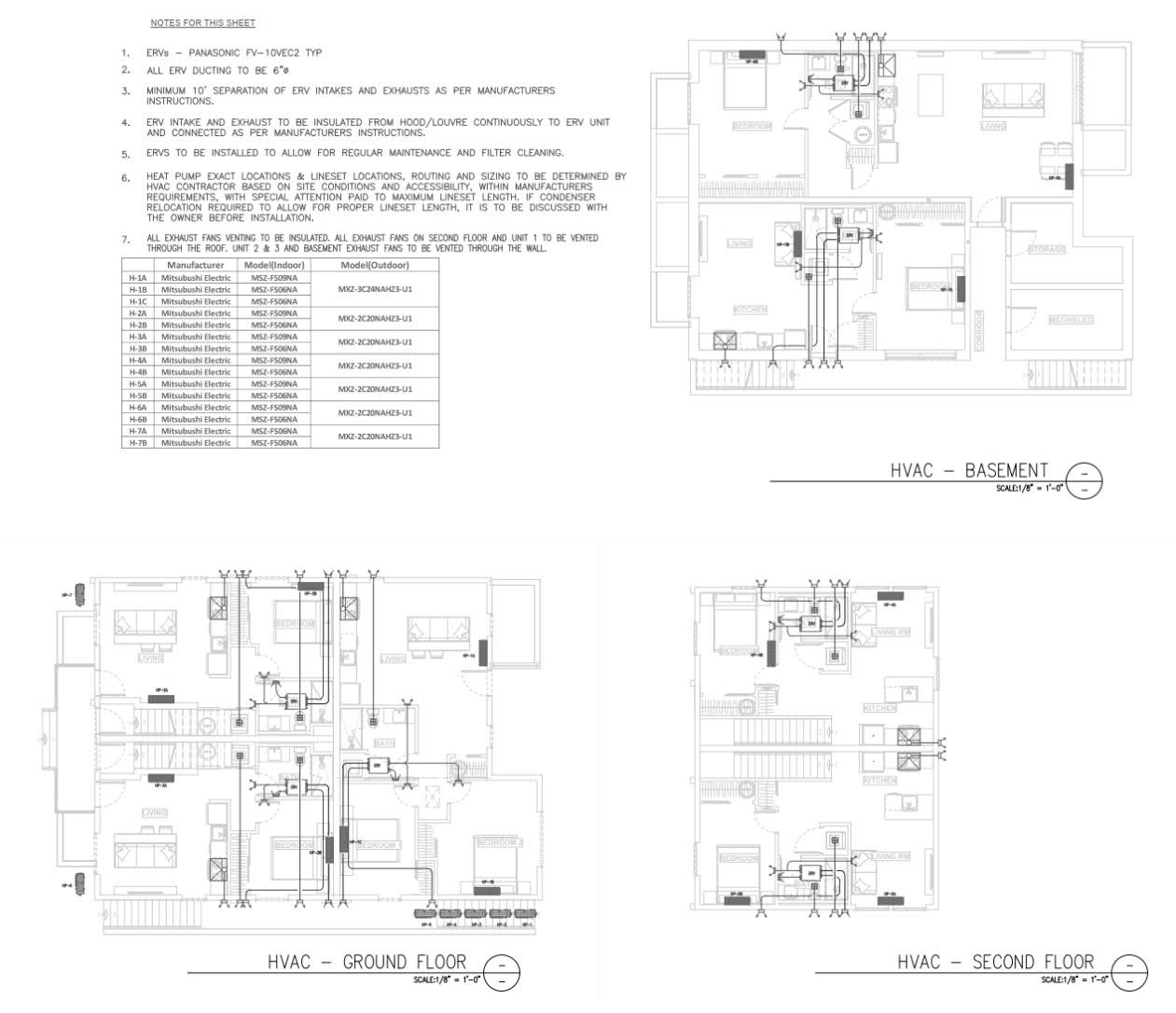
Mini Split Heat Pump System Designs

Heat pumps are the new standard for efficient residential heating and cooling. We design complete mini split layouts, select the best equipment for your needs, and provide detailed specifications. Note: ductless-only mini split systems typically require a fully ducted HRV/ERV for ventilation compliance.

Ductless & Ducted
📋

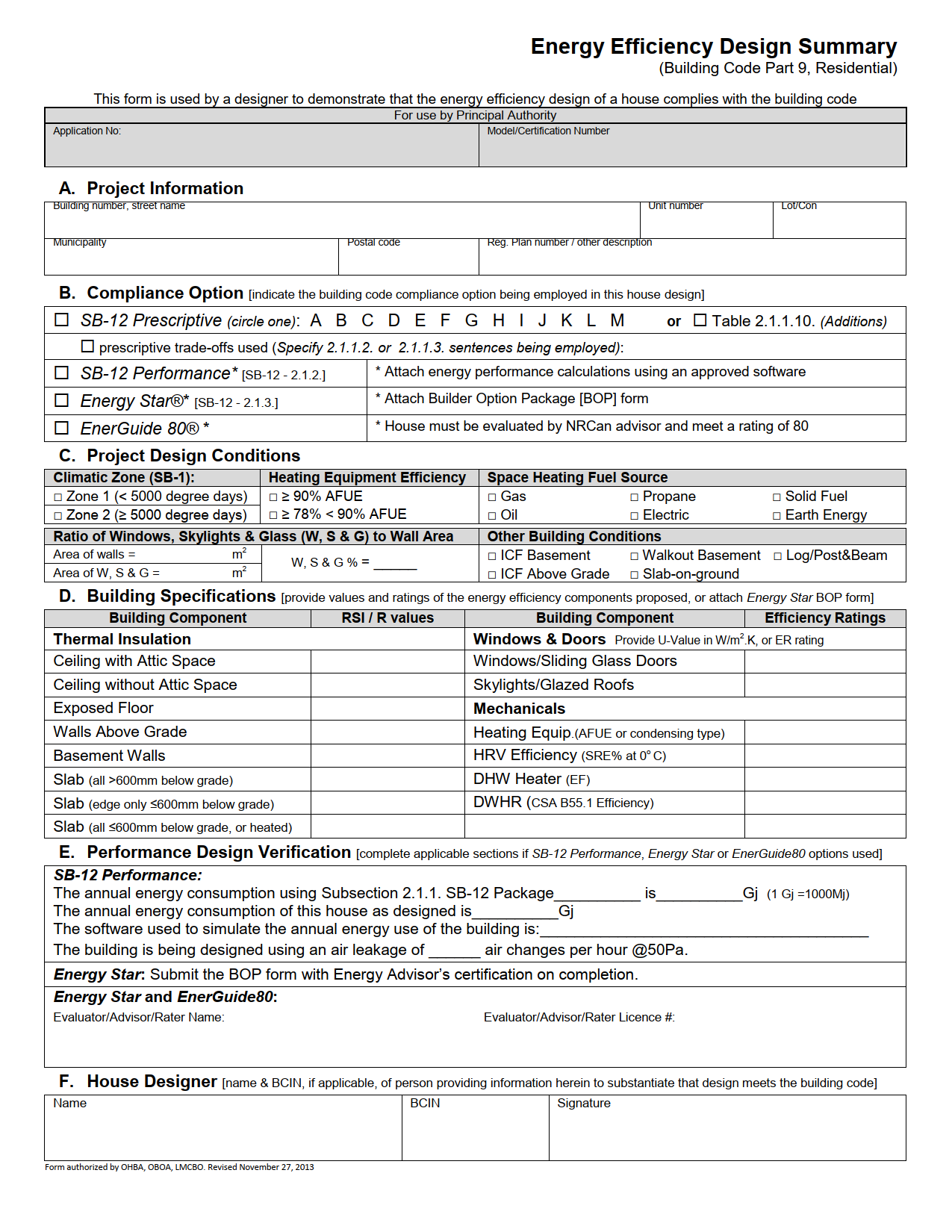
Energy Efficiency Design Summaries (EEDS / SB-12)

Ontario building departments require an Energy Efficiency Design Summary form (EEDS / SB-12) specifying the building envelope components and minimum heating equipment efficiencies. We complete this required documentation accurately to keep your project on track for permit approval.

SB-12 Compliant
🔥

Forced Air System Designs

Still the most common residential heating and cooling approach. Forced air systems efficiently condition the entire home from a central unit. We design systems using furnaces, heat pumps, hydronic air handlers, electric, or geothermal sources — balancing performance, efficiency, and aesthetics to suit your project.

Furnace / Heat Pump / Geothermal
🌊

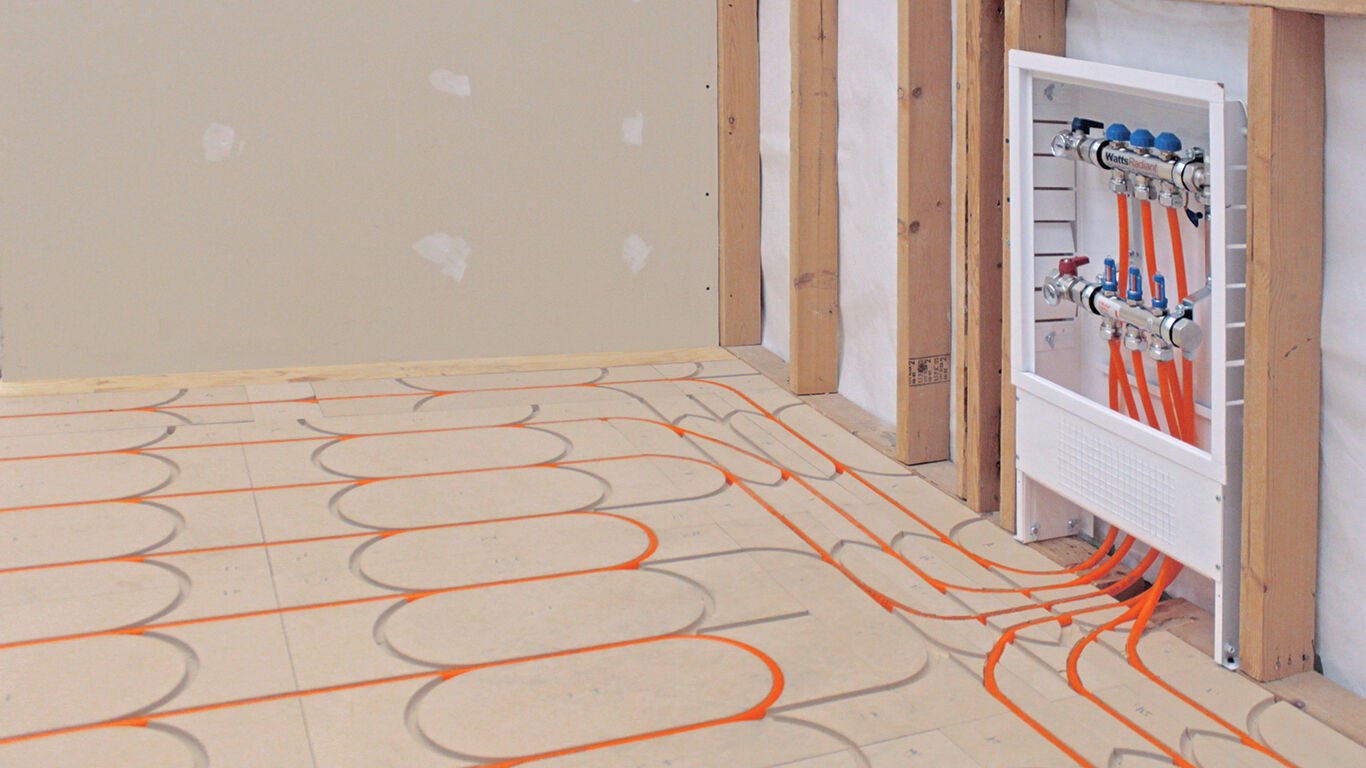
Hydronic In-Floor Heating Designs

Building a new home with a basement or slab? Radiant in-floor heating delivers unmatched comfort — warm floors, even heat distribution, and whisper-quiet operation. We design complete hydronic radiant systems including manifold layouts, zone plans, and equipment specifications.

Radiant Floor Heating
💬

HVAC Consultation

There are so many heating and cooling options available today that navigating the choices can feel overwhelming. We're here to help. Whether you want to understand your existing system, explore what options are available, weigh the pros and cons of different approaches, or figure out what to consider before finalizing your floor plan — our team brings real-world experience in installing, maintaining, servicing, troubleshooting, and designing HVAC systems. We can answer any question you have.

Pre-Design & Advisory
Professional HVAC ductwork and system installation for Ontario residential project
Ontario
Province-Wide Service

Precision Design.
Permit Approved.

🎯

Room-by-Room Accuracy

We calculate individual heating and cooling loads for every room in your project — not rough estimates — ensuring perfectly sized equipment and balanced airflow throughout the home.

📐

Permit-Ready Documentation

Our designs include all drawings and summary forms required by Ontario building departments — ventilation summaries, EEDS/SB-12 forms, system layouts — so your permit application goes smoothly.

Code-Compliant & Current

We stay up-to-date with Ontario Building Code requirements, SB-12 energy efficiency standards, and ASHRAE/CSA F280 calculation methodologies to keep your project fully compliant.

🌍

Ontario-Wide Service

We serve residential builders, contractors, architects, and homeowners across all of Ontario — from the GTA to Northern Ontario. Our remote design process means no geographic limitations.

🛠️

Real Installation Experience

Our background includes hands-on HVAC installation, maintenance, and service — not just design theory. That field experience means our designs are practical, buildable, and optimized for real-world performance.

Designed by Someone
Who's Been There

Catlin Homer

Owner & Lead HVAC Designer — Ayton, Ontario

BCIN #446979 G2 Gas Fitter HRAI #13345 HVAC Designers of Canada AutoCAD Certified Professional Wrightsoft Certified Sheet Metal Worker A/C Technician

🏛️ BCIN #446979 — Authorized to submit Ontario building permit drawings as a registered BCIN designer. HRAI Certification #13345.

Cool Cat's HVAC Design was built on a single idea: HVAC designs should work in the real world, not just on paper.

Owner and lead designer Catlin Homer didn't start his career behind a desk — he started in the field. Beginning as a licensed G2 gas fitter, he went on to work as a sheet metal worker and air conditioning technician, spending over a decade installing, servicing, troubleshooting, and repairing HVAC systems across Ontario. That hands-on trade background is what sets Cool Cat's apart from design firms staffed entirely by people who have never picked up a tool on a job site.

Catlin has seen firsthand what happens when a design doesn't account for real-world installation realities — ductwork that can't be routed where the drawings show it, equipment that's oversized because nobody ran the load numbers, systems that perform poorly because the designer never had to live with the consequences. Those experiences drove him to start a design practice built around practical, buildable, performance-first systems.

Today, with more than 1,000 completed residential HVAC designs, Cool Cat's serves custom home builders, general contractors, HVAC installers, architects, property managers, and homeowners across all of Ontario. As a member of HRAI (Heating, Refrigeration and Air Conditioning Institute of Canada) and HVAC Designers of Canada, Catlin stays current with Ontario Building Code requirements, SB-12 energy standards, CSA F280 calculation methodology, and best practices in modern residential system design.

The design process is entirely remote — send your floor plans and project details, and we'll deliver a complete, permit-ready package tailored to your building department's requirements. No geographic limitations. No unnecessary complexity.

"Designed for the real world, not just on paper."
CREDENTIALS & MEMBERSHIPS
  • BCIN #446979 — Ontario Building Code Identification Number (authorized to submit permit drawings)
  • G2 Licensed Gas Fitter — TSSA Ontario
  • HRAI Member — Certification #13345
  • HRAI Certified: RASDT · RHDT · RV9.32 · RHLG · RASD · RVF326 · RRHD · RCOM · SCDD · SCHL
  • HVAC Designers of Canada — Accredited Designer
  • Autodesk Certified Professional — AutoCAD for Design and Drafting
  • Wrightsoft Training Certification
  • Experienced Sheet Metal Worker — trade schooling and full apprenticeship hours
  • Air Conditioning Technician
  • 1,000+ Completed Residential HVAC Designs
Cities & Regions Served
Toronto & GTA Ottawa Hamilton London Kitchener Barrie Grey County Bruce County Owen Sound Collingwood Simcoe County Muskoka Orillia Wellington County Niagara Region Oakville Mississauga Brampton Markham Oshawa Whitby Ajax & Pickering Kingston Kawartha Area Haliburton Cobourg & Port Hope Lindsay Aurora & King City Milton Uxbridge & Stouffville Windsor & Chatham Haldimand/Norfolk All Ontario
HRAI Certifications & Industry Credentials
HRAI Certified RASDTRASDT
HRAI Certified RHDTRHDT
HRAI Certified RV9.32RV9.32
HRAI Certified RHLGRHLG
HRAI Certified RASDRASD
HRAI Certified RVF326RVF326
HRAI Certified RRHDRRHD
HRAI Certified RCOMRCOM
HRAI Certified SCDDSCDD
HRAI Certified SCHLSCHL
HVAC Designers of Canada — Accredited Designer HVAC DC

What Our
Clients Say

5.0
★★★★★
7 Reviews · Google Business Profile
Verified Google Reviews
★★★★★
Aug 2023
"Catlin designed the HVAC system for my project close to McMaster University. The design is of excellent value and quality, as it successfully solved a tough basement ceiling height issue. His design enables central A/C and heating using one system for the whole house while maintaining basement ceiling height that meets OBC requirement, unlike some proposals from other HVAC designers which use two heating systems without A/C for the basement. He is very professional and responsive. It is really enjoyable to work with him!"
★★★★★
Feb 2024
"Absolutely great service for my ERV design! Catlin answered a bunch of questions for me and provided great work!"
★★★★★
Mar 2024
"Catlin is an experienced HVAC designer with hands on past experience making him an excellent service provider. He provided me with great value and was patient in conducting the design and corresponding discussions. He was highly reliable and delivered as promised. Highly recommended!"
★★★★★
Jan 2025
"We've worked with Cool Cat's design on a few projects now and they are amazing and easy to work with. Very good communication and design. We look forward to working with you in the future!"
★★★★★
Early 2025
"Cool Cat's HVAC Design was great with a quick response to the first email and delivered a quality HVAC Design ahead of schedule. I would recommend her for any HVAC design."
★★★★★
Recent
"David really came through for us! We were in a bind and needed quick service as this was holding up our build. Very responsive communications and an extremely quick turnaround! Can't say enough about the service and very competitive pricing."
★★★★★

7 five-star reviews and counting. Cool Cat's HVAC Design has completed over 1,000 residential projects for builders, contractors, and homeowners across Ontario.

Worked with us recently? A Google review helps other Ontario builders and homeowners find trusted HVAC design services.

⭐ Leave a Google Review

Services & Pricing

Straightforward, flat-rate pricing with no hidden fees. All prices are in Canadian dollars. Complex multi-zone projects and large homes are priced by square footage — you only pay for what your project requires.

Service Description Price (CAD)
Heat Load Calculations
Heat Loss & Gain Calculations First 3,000 sq ft $250
Each additional 1,000 sq ft + $50
System Design
HVAC System Design First 3,000 sq ft $250
Each additional 1,000 sq ft + $50
Zones Over 1 Per additional zone + $100
Fully Ducted HRV/ERV Design Complete ventilation system layout $250
Documentation & Compliance
Ventilation Summary Municipality-required ventilation report $100
SB-12 Energy Efficiency Design Summary Ontario Building Code energy compliance form $100
Consultation
Pre-Design Consultation System selection, options review, project scoping $150
Rush Services
Weekend Rush Fee Rush service — designed by a working tradesman who knows what's at stake + $200

All prices are in Canadian dollars and subject to change. Contact us for a project-specific quote for large or complex builds. Every design is produced by a licensed HVAC professional who has worked hands-on in the trade — not just behind a desk.

Frequently Asked
Questions

What is a heat loss and gain calculation?
+

A heat loss and gain calculation (based on CSA F280 or Manual J methodology) determines how much heating and cooling capacity is required for each room in your home. It accounts for insulation values, window sizes, orientation, local climate, and occupancy. Accurate heat load calculations are the foundation of any properly designed HVAC system — they prevent oversized or undersized equipment, uneven temperatures, and wasted energy.

Do I need an HVAC design for my building permit in Ontario?
+

Yes, in most Ontario municipalities a building permit application for a new home or major renovation requires an HVAC design package. This typically includes heat loss/gain calculations, a mechanical system layout, a ventilation summary (to confirm adequate fresh air per ASHRAE 62.2), and an SB-12 Energy Efficiency Design Summary. Requirements vary by municipality — we're familiar with what different Ontario building departments expect.

What is SB-12 and do I need it?
+

SB-12 (Supplementary Standard SB-12 to the Ontario Building Code) establishes minimum energy efficiency requirements for houses and small buildings. Most new residential construction in Ontario requires an SB-12 Energy Efficiency Design Summary — a document that specifies your building envelope components (insulation, windows, doors) and confirms the heating equipment meets minimum efficiency standards. We complete this form as part of our design package.

What's the difference between a mini split and a forced air system?
+

A forced air system uses a central furnace or air handler with a network of ducts to distribute heated or cooled air throughout the home — it's the most common system type in Ontario. Mini split heat pumps are ductless (or semi-ducted) wall or ceiling-mounted units that condition specific zones without ductwork. Mini splits offer high efficiency and individual room control, but ductless systems typically cannot provide the fresh air ventilation required by code — meaning a separate HRV/ERV system with its own ductwork is needed.

How do I submit my project to Cool Cat's HVAC Design?
+

Simply email us at catlin@coolcatshvacdesign.com or call 289-260-3490. Include your floor plans (PDF or CAD preferred), a brief description of your project, your location, and what services you require. We'll review your project details and get back to you with a timeline and any questions we have. Our design process is entirely remote, so we can serve any location in Ontario.

Do you provide energy modelling?
+

Yes, we provide energy modelling services for residential projects. Energy modelling simulates a home's annual energy consumption based on the building envelope, mechanical systems, lighting, and occupancy patterns. It's used to demonstrate code compliance (especially for EnerGuide and Net Zero Ready standards), qualify for energy rebate programs, and optimize design decisions before construction begins. Contact us to discuss your project's modelling needs.

Who provides HVAC permit drawings in Ontario?
+

HVAC permit drawings in Ontario are typically prepared by licensed HVAC designers, mechanical engineers, or experienced design-build contractors. There is no single mandatory licence for HVAC designers in the province, which means quality varies widely. Cool Cat's HVAC Design specializes in residential permit documentation across Ontario. Our designer, Catlin Homer, holds BCIN #446979 (the Ontario licence required to submit permit drawings), is a G2 licensed gas fitter, HRAI Certified designer (membership #13345, 10 HRAI certifications), HVAC Designers of Canada Accredited Designer, and Autodesk Certified Professional — and critically, a working tradesman with over a decade of hands-on installation experience. That field experience ensures our designs are buildable, code-compliant, and municipality-ready.

What documentation is included in an HVAC permit package for Ontario?
+

A complete HVAC permit package for most Ontario municipalities includes: (1) a Heat Loss and Gain Calculation Report based on CSA F280 methodology, (2) a mechanical system layout showing duct routing, register/grille locations, and equipment specifications, (3) a Ventilation Summary form confirming ASHRAE 62.2-compliant fresh air delivery, (4) an SB-12 Energy Efficiency Design Summary (EEDS form) documenting building envelope components and equipment efficiency, and (5) a Schedule 1 Designer Declaration. We tailor every package to what your specific building department requires — if your municipality only needs certain documents, we won't charge you for what you don't need.

How much does HVAC design cost in Ontario?
+

At Cool Cat's HVAC Design, heat loss and gain calculations start at $250 and HVAC system design starts at $250 — both for homes up to 3,000 sq ft. Supporting documents like ventilation summaries ($100) and SB-12 EEDS forms ($100) are priced separately. A complete permit package for a typical Ontario home typically runs $500–$700. Larger homes are priced per additional 1,000 sq ft ($50 per block), and multi-zone designs include a $100 per-zone fee. All prices are in Canadian dollars. Contact us for a project-specific quote on large or complex builds.

Can HVAC design be done remotely for Ontario projects?
+

Yes — our entire design process is remote. You email us your floor plans (PDF, CAD, or even clear photos of hand-drawn plans), your project location, the system type you're planning to install, and any permit documentation your building department has requested. We review the project, prepare all required drawings and calculation reports, and deliver the completed package electronically. This means we can serve any builder, contractor, architect, or homeowner across Ontario, regardless of location — from downtown Toronto to rural Grey County to Northern Ontario.

What is an HRV or ERV, and do I need one for my Ontario home?
+

An HRV (Heat Recovery Ventilator) or ERV (Energy Recovery Ventilator) is a mechanical system that brings fresh outdoor air into your home while recovering the heat — and in the case of an ERV, also the moisture — from the outgoing stale air. In Ontario, most new residential construction is required by the building code to have mechanical ventilation that meets ASHRAE 62.2 fresh air standards. For homes using ductless mini split systems, a fully ducted HRV/ERV is typically required since the mini splits themselves do not deliver fresh air. We design ventilation systems and provide the required ventilation summary documentation as part of our permit packages.

Do you work with custom home builders and HVAC contractors in Ontario?
+

Absolutely. The majority of our work is with custom home builders, general contractors, HVAC installers, architectural designers, and property developers who need reliable permit-ready HVAC documentation for residential projects across Ontario. We understand construction timelines and the pressure that comes with permit deadlines. Our designs are produced with real installation practicality in mind — because our designer has spent years on job sites, not just in front of a computer. We also work directly with homeowners who are self-managing their build or major renovation.

Ontario HVAC
Knowledge Base

Practical guides for Ontario builders, contractors, and homeowners navigating the HVAC design and permit process — written by a licensed tradesman who has been on both sides of the job site.

Permits & Compliance

How to Get an HVAC Permit in Ontario

Building a home in Ontario? Here's a plain-language breakdown of what HVAC documentation your building department will require and how the permit process works.

If you're building or significantly renovating a home in Ontario, chances are you'll need an HVAC permit as part of your building permit application. Most homeowners and builders are surprised by exactly what's involved — it's more than just showing up with a furnace spec sheet.

What Is an HVAC Permit?

An HVAC permit authorizes the installation of a new heating, cooling, and ventilation system in your home. The permit process ensures your mechanical systems meet the Ontario Building Code (OBC), the SB-12 Supplementary Standard for energy efficiency, and local municipal requirements for ventilation and system performance.

Who Needs One?

In Ontario, an HVAC permit is generally required for new home construction, major renovations involving changes to the mechanical system, and additions requiring new or extended HVAC. Requirements vary by municipality — always check with your local building department.

What Documents Do You Need?

A typical HVAC permit package for a new Ontario home includes:

  • Heat Loss and Gain Calculation Report — Based on CSA F280 methodology, this calculates how much heating and cooling your home needs in each room. It's the engineering foundation of your entire HVAC design.
  • Mechanical System Layout — A floor plan showing duct routing, register and grille locations, and equipment specifications.
  • Ventilation Summary — Confirms your home will receive adequate fresh air per ASHRAE 62.2 standards.
  • SB-12 Energy Efficiency Design Summary (EEDS Form) — Documents your building envelope and confirms heating equipment meets OBC minimum efficiency standards.
  • Schedule 1 Designer Declaration — Required by some municipalities.

Who Can Prepare the Documents?

There is no strict single licensing requirement for HVAC designers in Ontario — which means quality varies significantly. Working with a designer who has real trade experience means your drawings will reflect what is actually buildable on a job site, not just what looks good on paper.

Cool Cat's HVAC Design handles HVAC permit documentation for residential projects across Ontario. Contact Catlin Homer at catlin@coolcatshvacdesign.com or call 289-260-3490.

Design Fundamentals

What is a CSA F280 Heat Loss Calculation — and Why Does It Matter?

The heat load calculation is the most critical step in any HVAC design. Here's what it is, what goes into it, and why getting it wrong is more costly than most people realize.

If you've ever gotten a quote for HVAC design in Ontario, you've probably seen the phrase "heat loss and gain calculations." But what does that actually mean, and why does it matter whether they're done properly?

The Short Version

A heat loss and gain calculation is an engineering analysis that determines exactly how much heating and cooling capacity your home needs — broken down room by room. In Ontario, this is based on the CSA F280 standard ("Determining the Required Capacity of Residential Space Heating and Cooling Appliances"), which is the Canadian equivalent of the American Manual J methodology.

The result tells you how large your furnace or heat pump needs to be, how much airflow each room requires (in CFM), and what duct sizes are needed to properly serve each space.

Why Does Proper Sizing Matter?

Equipment sizing is one of the most common problems in residential HVAC — and oversizing is surprisingly common. An oversized furnace short-cycles (turns on and off rapidly), causing wear and tear, uneven temperatures, and poor humidity control. An undersized system can't keep up on the coldest or hottest days. Either way, energy bills suffer and occupant comfort suffers.

Without a proper CSA F280 calculation, equipment is often sized by rough rules of thumb ("one ton per 500 square feet") that ignore your home's specific insulation values, window area, orientation, local climate data, and infiltration rates.

What Goes Into the Calculation?

  • Outdoor design temperatures for your specific Ontario location
  • Wall, ceiling, and floor insulation values (RSI/R-values)
  • Window area, type, glazing specs, and orientation
  • Air infiltration rate and construction tightness
  • Internal heat gains from occupants and appliances
  • Duct losses and gains based on duct location

When Is It Required?

A CSA F280 heat loss and gain calculation is required as part of most building permit applications for new residential construction in Ontario. It's also the mandatory first step before any HVAC system design can be produced.

At Cool Cat's HVAC Design, heat loss and gain calculations start at $250 for homes up to 3,000 sq ft. Contact us at catlin@coolcatshvacdesign.com or 289-260-3490.

Energy Compliance

SB-12 Compliance in Ontario: What Builders and Homeowners Need to Know

The SB-12 EEDS form is required for nearly all new residential construction in Ontario. Here's what it is, what it covers, and how it fits into your building permit package.

If you're building a new home in Ontario, you've likely heard the term "SB-12" or been asked for an "EEDS form." Here's a plain-language explanation of what SB-12 is, who needs it, and how to comply without confusion.

What Is SB-12?

SB-12 is Supplementary Standard SB-12 to the Ontario Building Code — formally titled "Energy Efficiency for Housing." It sets minimum energy efficiency requirements for houses and small buildings in Ontario, covering both the building envelope (insulation, windows, air sealing) and the mechanical systems (heating equipment efficiency). It applies to virtually all new residential construction in the province.

What Is the EEDS Form?

The Energy Efficiency Design Summary (EEDS) is the document that demonstrates SB-12 compliance to your local building department. It's a standardized form capturing:

  • RSI values of your wall, ceiling, and foundation insulation
  • Window and door specifications (U-values and solar heat gain coefficients)
  • Heating equipment type and efficiency rating (AFUE or HSPF)
  • Ventilation system type

The completed EEDS form is submitted as part of your building permit application. Without it, most Ontario municipalities will consider your application incomplete.

Who Needs to Comply?

SB-12 applies to most new residential construction in Ontario, including new detached and semi-detached houses, row houses and townhomes, and small multi-unit residential buildings. Additions and renovations may also trigger SB-12 requirements depending on scope and your municipality.

The Two Compliance Paths

Prescriptive Path — Your building meets specific minimum requirements for each component (insulation levels, window specs, equipment efficiency). This is the most common approach for standard residential construction.

Performance (Trade-off) Path — If your design doesn't meet prescriptive requirements in one area, you can compensate with better performance elsewhere. This approach typically requires energy modelling.

How Does HVAC Design Fit In?

Your heating equipment selection directly affects SB-12 compliance. The EEDS form requires you to specify your heating system type and minimum efficiency rating. A proper HVAC design package from Cool Cat's HVAC Design includes a completed EEDS/SB-12 form as part of the permit package — so you don't have to figure this out on your own.

SB-12 / EEDS forms are available as a standalone service for $100, or as part of our full permit package. Contact us at catlin@coolcatshvacdesign.com or call 289-260-3490.

Ready to Start
Your Project?

Send us your floor plans and project details and we'll get back to you promptly. Our process is fully remote — we serve builders, contractors, architects, and homeowners across all of Ontario.

Serving All of Ontario


📧
Email
catlin@coolcatshvacdesign.com
Fastest way to share your floor plans and project details
📞
Phone
289-260-3490
Available for consultations and project discussions
📍
Service Area
Ontario, Canada
We serve all municipalities across Ontario province-wide
⏱️
Trade Background
Hands-On HVAC Tradesman Turned Designer
Rush / weekend delivery available for time-sensitive permits
🐱
Start Your HVAC Design

Email your floor plans and project details to get started. Include your home's square footage, location, desired system type, and any permit requirements — we'll take it from there.

What to include when you email us:
Floor plans (PDF/DWG preferred) · Total square footage · Project location · Desired system type · Permit deadline (if applicable) · Any existing mechanical drawings